


Artículos recientes

10.October.2026
Remedios caseros para las manchas en la cara: qué sirve, qué no y cómo quitarlas con seguridad
0 Comments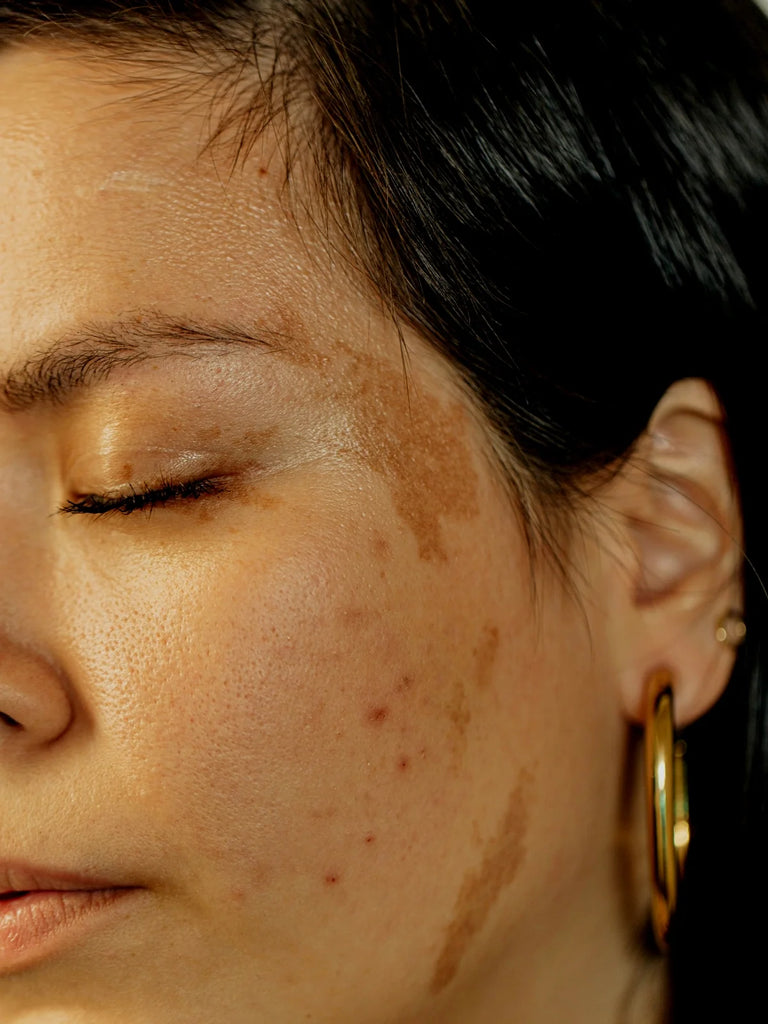

07.October.2026
Peptones and Biopolymers in the Buttocks: What They Are and Why Not to Inject Them
0 Comments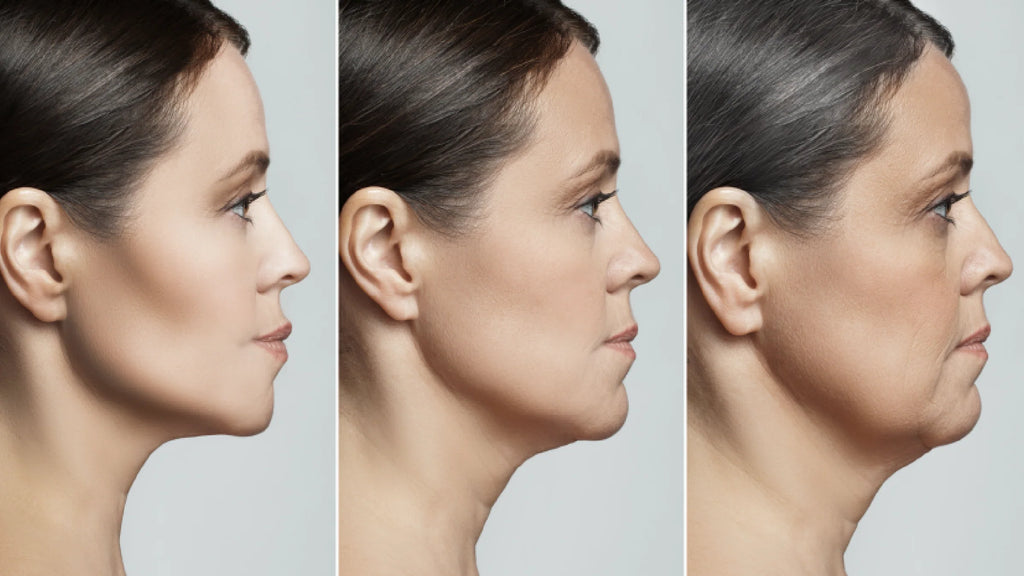
Exosomes in Aesthetic Medicine: What They Really Do and What the Evidence Says
By Dr. Olga Gómez Montoya, physician and surgeon · Aesthetic medicine · El Poblado, Medellín · Updated: October 2026
Someone says «exosomes» and it sounds like the latest thing in rejuvenation.
I had mixed feelings about this topic myself. I would say the evidence was young and, at the same time, I was seeing good responses in my practice. I sat down to review it calmly and realized both things were true: it depends on what for, by which route and with which product.
Here I explain it with the evidence in hand, without hype and without fear.
Quick-read summary
- Exosomes are nanovesicles (30 to 150 nanometers) that cells use to communicate and send repair signals [3].
- Their best evidence is as a topical adjuvant after a procedure, such as laser or microneedling: a double-blind trial showed less redness and a shorter recovery [1].
- For hair there is a signal, but it is low-level. No serious study compares them with minoxidil, finasteride or PRP [2].
- No exosome product is FDA-approved for injection [5]. In Colombia, INVIMA (Colombia's health products regulator) issued an alert in 2025 against cosmetics being used as injectables [6].
- The route matters: topical use after a procedure is well tolerated; unregulated injectables have been associated with complications.
- Not all exosomes are the same: the source, purity and traceability of the product change everything [4].
What are exosomes?
They are tiny vesicles, on the nanometer scale, that cells release to «talk» to each other. They carry proteins and genetic material with signals that, in theory, stimulate skin regeneration [3].
The idea is fascinating. That is why they are trendy.
But «exosomes» are not a single thing that either works or doesn't. They come from different sources (human stem cells, plants, platelets), with different levels of purity, and they are used by very different routes. That is where marketing and science start to part ways.
What do exosomes really do for the skin?
The best-supported indication is as an adjuvant after a procedure that renews the skin, such as a fractional CO2 laser or microneedling.
That is where the only double-blind, split-face trial with significant results exists: applied topically after a CO2 laser, they were associated with less redness in the first week, a slightly shorter recovery and a better outcome in acne scars [1].
It makes sense: freshly treated skin is asking for repair signals, and that is where an exosome can support the process.
That, for me, is the best way to use them today: as a complement to a procedure, not as a miracle injection.
Do exosomes work for hair?
There is a signal, but honestly it is low-level.
There are case series in which, applied after microneedling of the scalp, an increase in hair density was observed [2]. It is promising. But there is still no serious study comparing them with treatments that already have evidence, such as minoxidil, finasteride or PRP.
That is why, in hair loss treatment, I use them as a complement, never as a replacement for what already works.
And a word of warning: if a hair product is sold claiming it «outperforms minoxidil, finasteride and PRP», ask for the study. If the comparison only appears in press releases, that is a brochure, not evidence.
Are exosomes approved? Can they be injected?
This is the fact almost no one tells you, and it is the one that protects you most.
No exosome product is FDA-approved for any indication [5]. In Colombia, INVIMA has no specific category for them, and in 2025 it issued an alert against products registered as topical cosmetics that were being promoted for injectable use, mesotherapy or IV therapy [6].
That is why the route matters so much. A topical exosome on freshly treated skin is one thing. Injecting a product that is only registered to go on top of the skin is an unauthorized use, and it has been associated with complications.
How can you tell if an exosome product is high quality?
They are not all the same, and this is something you can ask about. A serious product should be able to show you its characterization sheet: how many particles it contains, its purity, its markers, how it was isolated, its batch and its registration [4].
The uncomfortable reality is that, to date, no product on the market has quality verification performed by a third party fully independent of the manufacturer. So traceability is the minimum I require before using any of them.
My approach, in one line
I use exosomes where there is a signal, by the right route, with a product I can trace, and without promising what the science does not yet support.
Anything injected without approval, with a product no one can trace, does not come into my practice, no matter how trendy it is.
If you were offered exosomes and you are not sure what to believe, bring it to your assessment. We will look at it with evidence and without hype. Message us ASSESSMENT on WhatsApp.
Frequently asked questions about exosomes
What are exosomes?
They are nanovesicles, 30 to 150 nanometers in size, that cells release to communicate. They carry proteins and genetic material with repair signals, which is why they are being studied for skin regeneration.
Are exosomes approved for aesthetic use?
No. No exosome product is FDA-approved for any indication, and in Colombia INVIMA issued an alert in 2025 against the injectable use of products registered only as cosmetics.
Do exosomes work for hair?
There is a low-level signal: case series show increased density when applied after microneedling, but there are no studies comparing them with minoxidil, finasteride or PRP. They are used as a complement, not a replacement.
Can exosomes be injected?
They are not approved for injection. The topical route after a procedure is well tolerated; unregulated injectable use has been associated with complications. A medical assessment is required.
What are exosomes best used for?
Their best evidence is as a topical adjuvant after a fractional laser or microneedling, where they were associated with less redness and a shorter recovery.
How do I know if an exosome product is good quality?
It should have a characterization sheet (particle count, purity, markers, isolation method), a batch number, a registration and a cold chain. If they cannot show you this, be wary.
About the author
Dr. Olga Gómez Montoya, physician and surgeon from the University of Antioquia, practicing natural aesthetic medicine in El Poblado, Medellín. Her approach: medical judgment before procedures, natural results and evidence-based education.
Educational information. It does not replace a medical assessment and is not a treatment recommendation.
References
- Kwon HH, et al. Combination treatment with human adipose tissue stem cell-derived exosomes and fractional CO2 laser for acne scars: a 12-week prospective, double-blind, randomized, split-face study. Acta Derm Venereol. 2020. PMC
- Gupta AK, Wang T, Rapaport JA. Exosomes and hair: a review. J Cosmet Dermatol. 2023. PubMed
- Wang CK, et al. Regulation of exosomes as biologic medicines. 2024. PMC
- Welsh JA, et al. MISEV2023: minimal information for studies of extracellular vesicles. J Extracell Vesicles. 2024. PubMed
- FDA. Public Safety Notification on Exosome Products. FDA
- INVIMA. Alert on the irregular marketing of cosmetics promoted for injectable use (2025). INVIMA
Artículos relacionados

10
Oct
07
Oct

07
Oct

07
Oct

07
Oct

![SVR Ampoule B [B3] Hydra 30 ml, sérum hidratante con niacinamida y ácido hialurónico](http://www.olgagomez.com.co/cdn/shop/files/Ampoule__B__2000x2000_14d5c39f-f664-464a-a86d-22e925085cfc.jpg?v=1791397813)
![SVR Ampoule B [B3] Hydra 30 ml, sérum hidratante con niacinamida y ácido hialurónico](http://www.olgagomez.com.co/cdn/shop/files/SVR_retouche_ABC_Ampoule_B_02_1200x1200_f9dbbec9-d113-461f-b0eb-8040cb9df6e5.jpg?v=1791397813)


